New Electrical Installation vs. Retrofit: What Works for Your Business?
When a business needs to update its electrical system, the first big question is whether to start fresh or update the existing setup. Both approaches have their place, and the right choice depends on the building's age, the type of work done there, and the budget. Understanding the difference between a new electrical installation and a retrofit can save time, reduce disruption, and help avoid safety issues down the road.
A new installation means running all new wiring from the service panel to every outlet, switch, and fixture. It is the go-to option when a building is being constructed, when the old wiring is too deteriorated to reuse, or when the space is being completely reconfigured. A retrofit, on the other hand, keeps the existing wiring where it is in good shape and replaces only the parts that are outdated, damaged, or undersized. Retrofits are common when a business moves into an older space and needs to bring the electrical system up to current code without tearing out every wall.
The condition of the existing conduit system and junction boxes plays a major role in deciding which path to take. If the conduit is rusted, crushed, or filled with old wiring that is brittle, a full replacement is often the safer route. But if the conduit is intact and accessible, a retrofit can reuse it to pull new wires, which saves time and reduces mess. Similarly, junction boxes that are still in good condition can be kept, as long as they are large enough for the new wiring and remain accessible per code.
When a New Installation Makes Sense
Starting from scratch gives you complete control over the electrical plan. You can place outlets exactly where they are needed, size the circuits to match the equipment, and design the wiring layout for easy future changes. This is especially valuable for businesses with heavy power demands, such as workshops, commercial kitchens, or data centers. In these settings, a new installation allows you to create a dedicated circuit schedule that balances loads across phases and prevents nuisance tripping.
Another reason to go new is when the building's occupancy load has changed significantly. A space that was originally designed for light office work may not have enough circuits or the right grounding for industrial equipment. Retrofitting can only go so far; if the main service panel is too small or the building lacks a proper grounding electrode system, a new installation is the only way to meet code and keep everyone safe.

New work also simplifies permitting. A complete electrical plan submitted with the permit application gives inspectors a clear picture of what will be installed. There is less back-and-forth about existing conditions that may not meet current standards. For the business owner, this means fewer surprises during the inspection process.
When a Retrofit Is the Better Choice
Retrofitting is often the practical answer when the budget is tight or when downtime needs to be minimal. For example, a retail store that is open six days a week cannot afford to have power off for days while new wiring is run through every wall. A retrofit can target only the circuits that are failing or undersized, leaving the rest of the system live and working.
Older buildings with knob-and-tube wiring or early plastic-insulated wiring are prime candidates for retrofit replacement. In many cases, the existing conduit is still sound, and the main panel has capacity. An electrician can pull out the old wiring and install new copper conductors without opening walls. This approach is faster and less disruptive than a full gut, and it still delivers the safety and capacity gains that a modern business needs.
What a Retrofit Can and Cannot Fix
A retrofit can add GFCI protection at outlets near water, upgrade the grounding at the panel, and replace worn breakers. It can also increase the ampacity of individual circuits by pulling larger wire through the existing conduit, provided the conduit is not already at its fill limit. However, a retrofit cannot fix a main panel that is too small for the building's total load, nor can it resolve a missing ground path. Those issues call for a new service entrance or, at minimum, a major upgrade that is closer to a new installation than a simple swap.
Another limit of retrofits is accessibility. If the wiring runs through enclosed ceilings or walls that cannot be opened easily, the electrician may not be able to reach the junction boxes needed to make the splices. In that case, a full replacement that routes new conduit along accessible paths may be the only way to meet code.
How to Decide
Start by looking at the age and condition of the existing wiring. If the insulation is cracking or the wires are aluminum instead of copper, a retrofit that replaces all the conductors is wise. Next, check the main panel rating and the number of spare breaker slots. If the panel is full and the building is at capacity, a new service panel is needed regardless of the approach. Finally, consider the business operations. If the space can be shut down for a week, a new installation gives the most flexibility. If the business must keep running, a phased retrofit that works around the schedule is the way to go.
For many commercial properties, the best answer lies somewhere in between. A business might install new wiring in the back-of-house areas where heavy equipment sits, while retrofitting the front-of-house circuits that only serve lights and computers. This hybrid approach balances cost, disruption, and safety.
No matter which route you choose, the work must be done by a licensed electrician who understands commercial loads and local codes. That is where expert installation for commercial facilities makes the difference. A professional will evaluate the existing system, design a plan that meets current code, and handle the permits and inspections so the business owner can focus on running the operation.
Retrofits and new installations each have their strengths, but both require careful planning. An experienced team will look at the building's wiring layout, the condition of the conduit system, and the specific power needs of the equipment. They will also account for future growth, so the system does not become a bottleneck as the business expands. When the electrical plan is well thought out, the result is a safe, reliable system that supports the business every day.
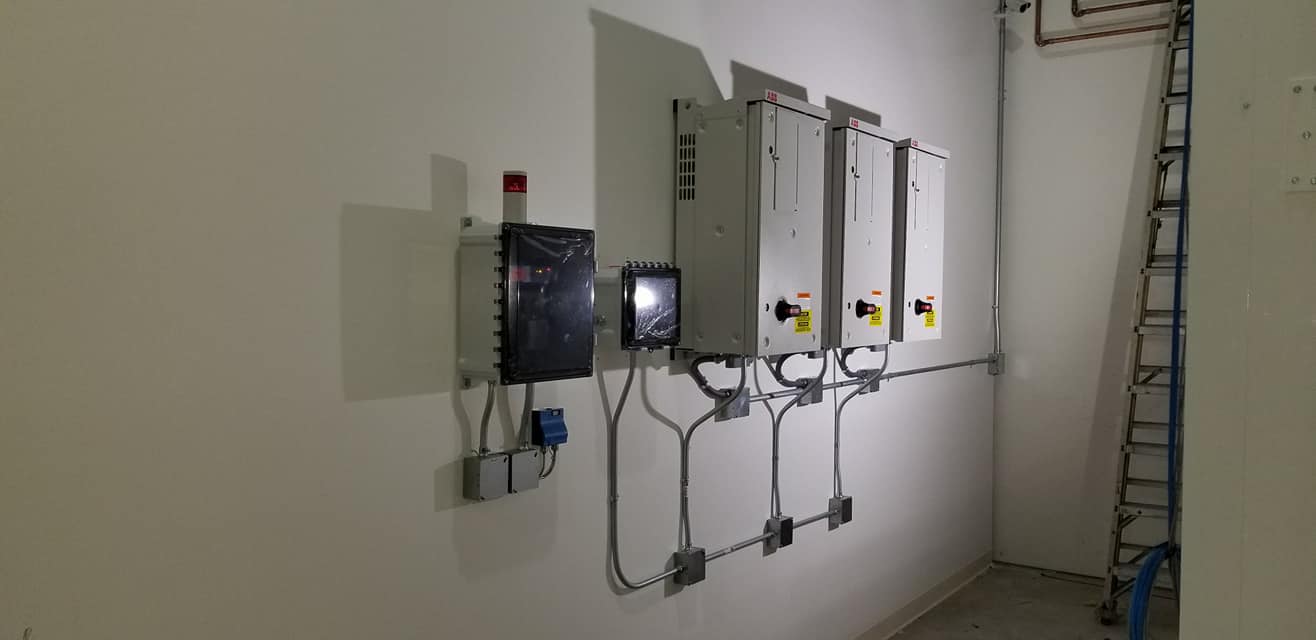
Investing in expert installation for commercial facilities is not just about meeting code. It is about protecting the equipment, the building, and the people inside. A properly designed installation reduces the risk of arc faults, overheating, and power interruptions. It also makes troubleshooting easier later on, because the circuits are labeled, the junction boxes are accessible, and the grounding is solid.
Whether you are building out a new space or bringing an old one up to date, the decision between a new installation and a retrofit comes down to the condition of what is already there, the budget, and the timeline. A thorough inspection by a qualified electrician will reveal which approach fits your situation. From there, the job becomes a matter of good planning and professional execution.